There's a moment, just after you've set up your tent and before the sun goes down, when the Fuji Five Lakes region is at its most perfect. The cooking stove is hissing. Your sleeping bag is unrolled and waiting. The lake is doing that thing where it reflects the sky so perfectly you can't tell where the water ends and the air begins. And above it all, Fuji sits in the distance like it was placed there specifically for your campsite. That moment is why we camp here. That moment is worth the mosquito bites, the cold nights, and the booking headaches.
Lake Kawaguchi — Convenient Camping
The campgrounds around Lake Kawaguchi are the most accessible in the region. They're close to the station, close to convenience stores, and close to each other. This is where most first-time campers in the Fuji area end up, and it's not a bad choice. You get the view, the facilities, and the security of knowing that if you forgot something, there's a 7-Eleven within walking distance.
Lake Kawaguchi campgrounds charge ¥1,500 to ¥3,000 per night for a tent site. The price variation depends on location (lakeside sites cost more), season (weekends and holidays are pricier), and facilities. Most campgrounds have flush toilets, cold-water sinks, and coin-operated showers that cost ¥200 for 5 minutes. Some of the larger ones have communal kitchens with sinks and cooking areas. A few have small shops that sell basic supplies, firewood, and ice.
The main Lake Kawaguchi campground on the north shore is the most popular. It's within walking distance of the lakeside promenade, has direct Fuji views from many sites, and the facilities are well-maintained. The downside: it fills up fast. In summer, especially August weekends, you need to book at least a month ahead. Some Japanese campers book for the following year immediately after their current trip ends. It's competitive.
Booking a Kawaguchi campsite is the biggest challenge for foreign visitors. Most campgrounds don't have English websites. Many don't accept online reservations at all — they require you to call in Japanese or show up in person to book. If you have a Japanese-speaking friend, use them. If not, consider using a booking service or asking your accommodation in Tokyo to call for you. Walk-in availability exists on weekdays outside peak season, but don't count on it in July or August.
What you get at a Kawaguchi campground: a flat-ish patch of ground (some sites are on slight slopes — check before you commit), access to toilets and showers, a place to park your car, and a view that justifies the hassle. What you don't get: solitude. These campgrounds are social places. People cook together, kids run between tents, and on summer evenings it can feel like a festival. If that's your vibe, you'll love it. If you're seeking wilderness silence, head to Motosu.
Lake Saiko — Forest Camping
Saiko's campgrounds are quieter, cheaper, and more atmospheric than Kawaguchi's. You're camping at the edge of the Aokigahara forest, which sounds more dramatic than it is — in reality, it's just a beautiful woodland with moss-covered trees and excellent shade. The campsites here feel more private, more spread out, and more connected to the natural environment.
Prices range from ¥1,000 to ¥2,000 per night. Facilities are slightly more basic than Kawaguchi — you might get pit toilets instead of flush, and the showers might be cold-water only at some sites. But the trade-off is worth it for many campers. The atmosphere is calmer, the sites are larger, and the forest setting is genuinely special. Jake's second-favorite campsite in the region is here — a spot on the east shore where the trees form a natural windbreak and the morning bird calls are your alarm clock.
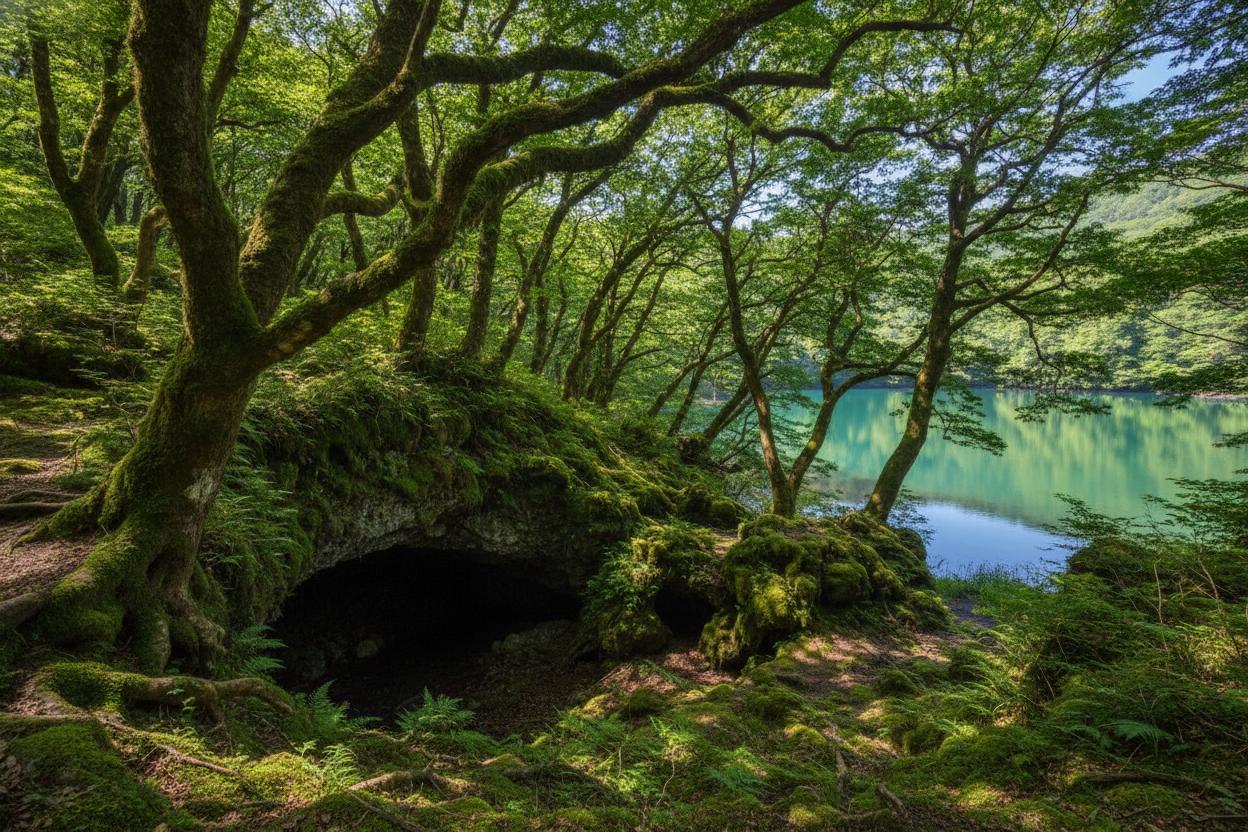
Access to Saiko campgrounds without a car is possible but requires planning. Take the Green Line bus from Kawaguchiko Station and get off at the campground stop. The buses run every 30-60 minutes depending on the season, and the last bus back is usually around 6pm. If you're camping, you obviously don't need the return bus until the next day. But if you need to make a supply run to Kawaguchiko, plan around the schedule — taxis from Saiko to Kawaguchi cost around ¥3,000.
The caves near Saiko — Fugaku Wind Cave and Narusawa Ice Cave — are worth visiting from your campsite. Both are within walking distance of some campgrounds and make for a good morning activity before the day-trippers arrive. Entry is ¥350 each or ¥600 combined. The Wind Cave is a lava tube that stays cool year-round. The Ice Cave has actual ice formations inside, even in summer. Both are slippery inside — wear shoes with grip, not flip-flops.
Lake Motosu — The Real Deal
Lake Motosu is where you go when you've camped at Kawaguchi and Saiko and realized you want something wilder. This is the most remote of the five lakes, with the most basic facilities and the best stars. If Saiko is quiet, Motosu is silent. On a still night, you can hear your own heartbeat.
The main campground at Motosu sits directly on the lake shore. Sites are first-come, first-served, and in summer they fill up by Friday afternoon. Arrive Thursday if you can. The sites closest to the water have the best views but are also the most exposed to wind. Jake learned this the hard way — his tent collapse story happened at a lakeside site in Motosu. He didn't stake the corners properly, the wind picked up at 1am, and by 2am he was carrying his sleeping bag to the car. The wind at the base of a 3,776-meter volcano is real. Stake your tent. Use all the guy lines. Bring extra stakes.
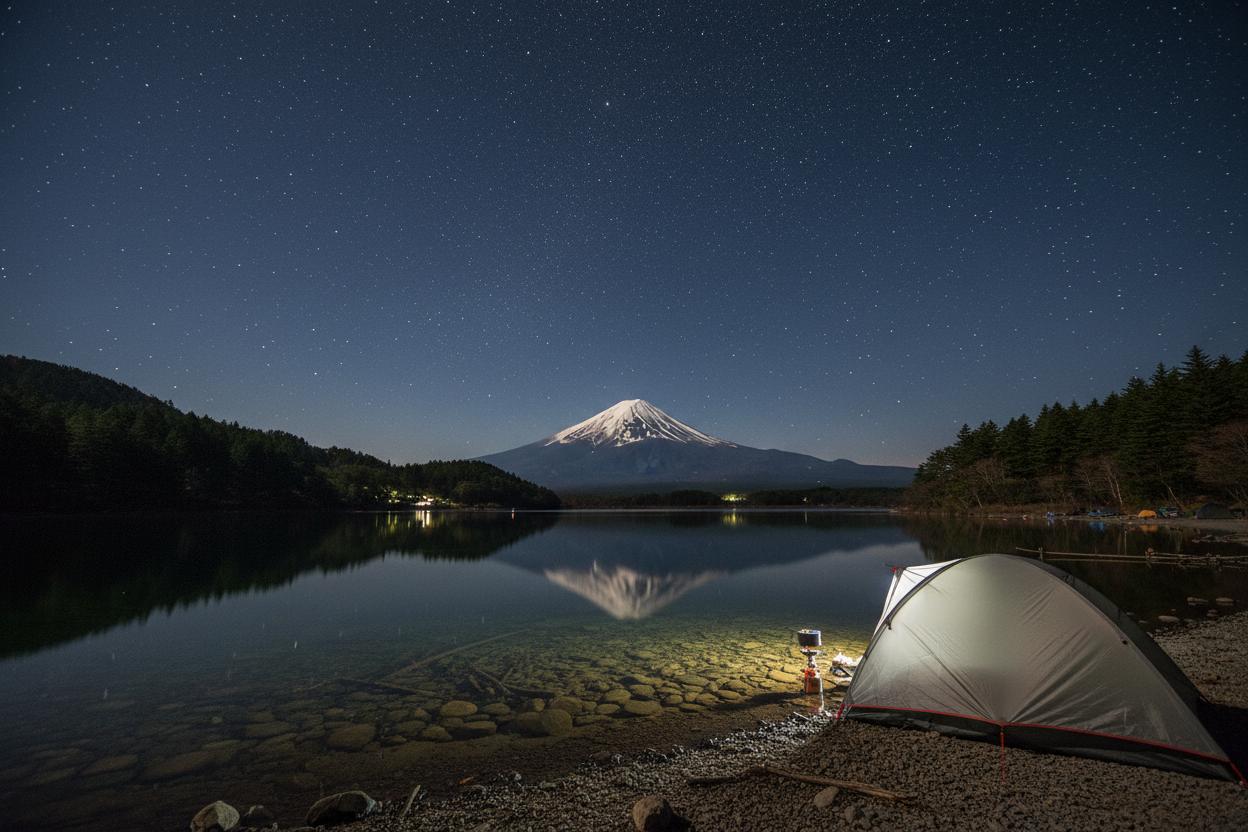
Facilities at Motosu are minimal. Toilets (basic but maintained), cold-water taps, and that's about it. No showers. No shop. No WiFi. No cell signal, most of the time. You need to bring everything: all your food, all your water (or a filter), all your cooking equipment, warm clothes, and a backup plan in case the weather turns. ¥1,500 per night. Cash only, paid at the honor box or to the caretaker who makes rounds in the morning.
Access to Motosu requires a car. Full stop. The road from Route 709 is narrow, winding, and takes about 15 minutes of careful driving. There's no bus service. Taxis won't come out here unless you arrange a pickup time and pay a premium. If you don't have a car, you can't camp at Motosu. Consider this non-negotiable.
But if you do have a car, and you do make it out here, and the weather is clear? There's nothing else like it in the region. Priya drives out at midnight just to shoot the Milky Way over the lake. She's fallen asleep in her car more times than she can count, waking up at 4am to drive back to Tokyo for work. That's the kind of place Motosu is. It makes reasonable people do slightly unreasonable things.
Booking Campsites — The Japanese Reality
Here's where things get tricky. Camping in Japan, especially in popular areas like the Fuji Five Lakes, is not as straightforward as showing up with a tent and a credit card. Many campgrounds require advance reservations, and the reservation process often requires a Japanese phone number for confirmation texts. If you don't have one, you're at a disadvantage.
Strategies that work: First, book through a Japanese travel website like Rakuten Travel or Jalan, which sometimes accept international phone numbers. Second, have someone in Japan call for you — a hotel concierge, a friend, or a booking service. Third, show up in person a day or two early and book at the campground office. This works on weekdays and shoulder season but is risky in peak summer.
Some campgrounds have started accepting online reservations through their own websites, but these are almost always in Japanese only. Google Translate can get you through the form, but the confirmation process might still require a Japanese phone number. Be persistent. Call during Japanese business hours (9am-5pm) and be patient with the language barrier.
Walk-in camping is possible at smaller, less popular sites, especially on weekdays. Motosu operates on a first-come, first-served basis with no reservations. The Shoji-ko campground is similarly informal. But for Kawaguchi in summer, don't risk it without a booking.
What to Pack
The most important thing to know about camping at the Fuji Five Lakes: nights are cold, even in summer. The elevation is around 900 meters, and the mountain creates its own weather patterns. Temperatures can drop to 10°C or lower on any given night, even in August. Jake has woken up to frost on his tent in September. Priya uses a -5°C rated sleeping bag year-round and has never regretted it.
Bear bells are recommended but not strictly necessary. Bear encounters in this area are extremely rare — the last significant incident was years ago — but the bells are cheap (¥300-¥500 at any outdoor shop) and they give you peace of mind. What you actually need the bells for is alerting other campers to your presence on shared paths. They're as much a courtesy as a safety measure.
Insect repellent is non-negotiable from June through September. The mosquitoes near the lakes are relentless, especially at dusk. Bring DEET-based repellent and a headnet if you're particularly sensitive. The mosquitoes are worst at Saiko and Motosu where there's standing water and less wind.
Essential Packing List
- Tent with full rainfly and all stakes/guy lines
- Sleeping bag rated to at least 5°C (0°C or lower recommended)
- Sleeping pad for insulation from ground
- Headlamp + spare batteries
- Portable stove + fuel canisters (fuel available at Kawaguchi shops)
- Cooking pot, utensils, mug, bowl
- Insect repellent (DEET-based, June-Sept)
- Bear bell
- Warm layers (fleece, down jacket)
- Rain gear
- Trash bags (pack out everything)
- Toilet paper and hand sanitizer
- Cash (campgrounds don't take cards)
- Earplugs (campgrounds can be noisy)
Fire Rules and Regulations
Open fires are restricted at many campgrounds in the region, especially during dry periods. The rules vary by site and by season. At Kawaguchi, open fires are generally prohibited except in designated fire pits or grills. At Motosu, fires are allowed on the beach below the high-water mark but not on the grass camping areas. At Saiko, it depends on the specific campground — ask when you check in.
Even when fires are allowed, you need to be careful. The wind off the mountain can pick up suddenly and turn a small campfire into something dangerous. Keep water nearby. Never leave a fire unattended. And fully extinguish it before you go to sleep — not just "looks like it's out," but water-poured, stirred, and water-poured again.
Portable gas stoves are the safer and more reliable option. Bring a windscreen — the lakeside breeze affects stove performance more than you'd expect. Fuel canisters (the standard threaded type used by most camping stoves) are available at the outdoor shop near Kawaguchiko Station and at some convenience stores. In peak season, they sometimes sell out, so bring a spare.
Quiet Hours and Campground Etiquette
Official quiet hours at most campgrounds are 10pm to 6am. In practice, this means keep your voices down, don't run generators, and don't play music after 10. Japanese campground culture is generally respectful and quiet. You'll see families with kids going to bed early, couples reading by lantern light, and an overall atmosphere that's more "retreat" than "festival." It's one of the things we appreciate about camping here.
The pack-it-out rule is absolute. There are no trash bins at most campgrounds — you are expected to take every piece of waste with you when you leave. This includes food scraps, which can attract animals. Bring multiple trash bags, separate recyclables if you can, and dispose of everything properly when you get back to town. Leaving trash at a campsite is unacceptable and can result in fines or being banned from the campground.
The Bottom Line
Camping at the Fuji Five Lakes is one of the best outdoor experiences in Japan. Waking up to a clear view of Mount Fuji from your tent door is something you'll remember for the rest of your life. But it requires preparation. The cold nights, the booking complications, and the gear requirements are real. Don't show up with a summer-weight sleeping bag and a hopeful attitude. Show up with the right equipment, a confirmed reservation, and a willingness to embrace the slightly rustic nature of Japanese campgrounds.
Our advice for first-timers: start with Lake Kawaguchi. Get used to the Japanese campground system, figure out what you forgot to pack, and enjoy the convenience of nearby shops and facilities. Once you've done that, graduate to Saiko for the forest experience. And when you're ready for the real deal — when you want silence, stars, and the feeling that you're the last person on Earth — drive to Motosu. Just remember to stake your tent.